
“You matter because you are you, and you matter to the end of your life.”
- Cicely Saunders
WHAT IS HOSPICE CARE?
Hospice is specialized care available to patients who are experiencing an advanced, life-limiting incurable disease, and who have elected to focus on comfort and symptom management rather than curative disease treatments. At IPH Hospice Care, our goal is to provide patients with a level of care that focuses on pain management, symptom relief, comfort, dignity, and quality of life.
Our team, which consists of our doctor, nurse practitioner, registered nurse, licensed vocational nurse, nurse aide, social worker and spiritual counselors/chaplains will work closely with the patient and their family to develop a personalized care plan. Our focus is to deliver clinical, emotional, and spiritual support, guiding the patient and family through the end-of-life journey.
Hospice isn't about dying; it’s about affirming life, living it to the fullest, and making a profound difference in a patient's quality of life by allowing them to continue making precious memories with those they love and doing things they enjoy.
WHAT ARE THE BENEFITS OF HOSPICE CARE?
You are not in this alone. Our hospice care is provided by a team of experts who will help guide the patient and caregivers through their unique end-of-life journey. Our team includes our hospice physician, hospice nurse practitioner, registered nurses, licensed vocational nurses, nurse aides, social worker, spiritual counselors/chaplains, and our volunteers.
Hospice is provided in the comfort of a patient's home or a home like-setting, such as a nursing home, assisted living or independent living facilities.
Hospice provides personalized care and support for the patient and their family.
The hospice team provides education about the disease process, care management and the dying process, which gives patients and caregivers the information needed to make informed decisions.
Medications, medical supplies and equipment are delivered to the home.
The patient and caregivers have access to our on-call service healthcare experts 24 hours a day.
Hospice respects and honors the patient's last wishes. Together our hospice team, the patient and their caregivers will focus on fulfilling the patient's requests while maintaining their dignity. If you are Medicare and/or Medicaid eligible, your out-of-pocket costs are significantly reduced or may even be covered up to 100%. Private insurance coverage varies and co-pays may apply.
Hospice Care provides the patient and the family counseling, guidance, and support throughout the end-of-life journey and up to a year after the patient has passed.
Studies have shown that patients with life-limited illnesses who elect hospice care, live an average of 30 days longer than patient's who did not elect care.
WHO PAYS FOR HOSPICE?
Medicare
For most patients aged 65 or older, Medicare Part A covers hospice care when a physician certifies a life expectancy of six months or less (if the illness follows its normal course)
Medicaid
Medicaid also covers hospice care in Texas for eligible individuals who meet income and medical criteria. Benefits are similar to Medicare and often involve little to no cost to the patient or family.
Private Insurance
Many private insurers—including employer plans and Medicare Advantage plans—offer hospice coverage that closely mirrors Medicare. Coverage details may vary.
Veterans Benefits
Eligible veterans may receive hospice care through the VA, either directly or via contracted hospice providers, with coverage comparable to Medicare.
QUALIFICATIONS FOR HOSPICE CARE
Hospice appropriate individuals may exhibit some or all of the following:
Repeated hospitalizations or emergency room visits
Increasing or difficult-to-manage symptoms
Spending most of the day in bed or seated
Progressive decline in strength, function, or overall health
Frequent falls or unintended weight loss
Changes in memory or cognitive function
Shortness of breath, including at rest
Needing assistance with activities of daily living such as bathing, dressing, eating, or mobility
A serious or life-limiting illness as determined by a physician
*Hospice eligibility is based on a physician’s clinical assessment and individual circumstances.
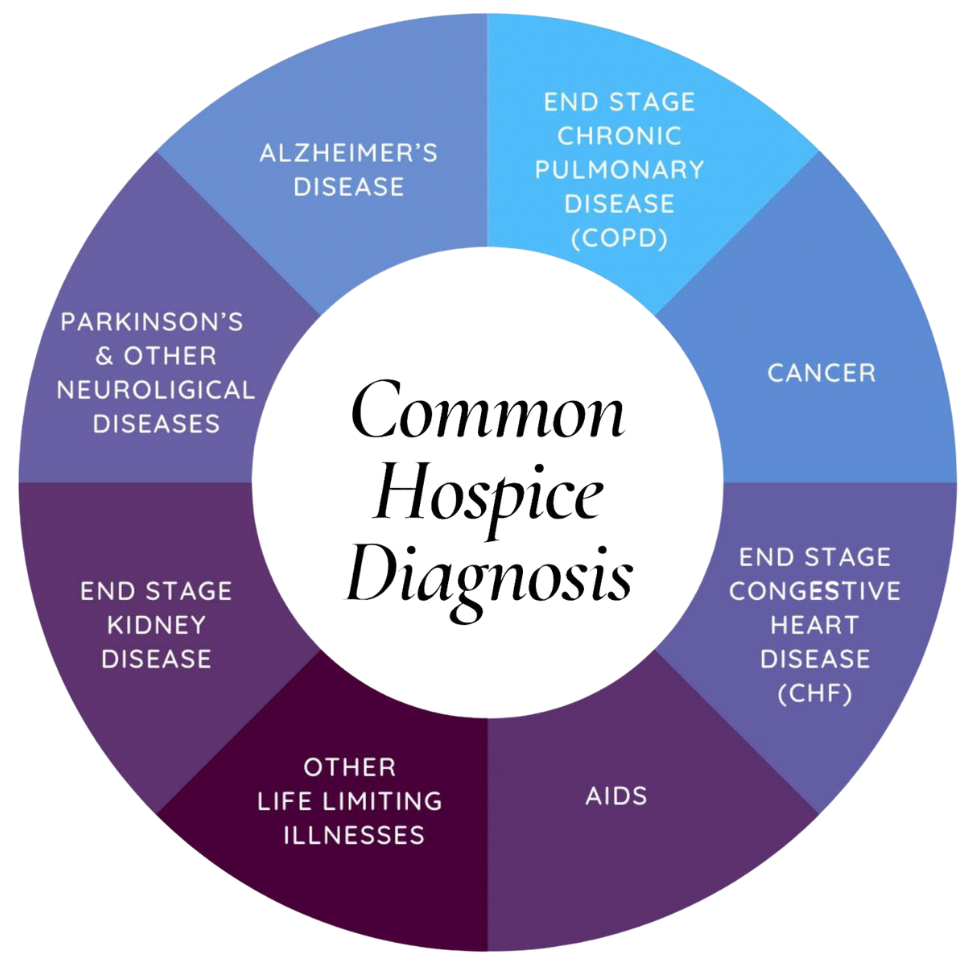
Hospice Services Provided:
Hospice Physician
Hospice Nurse Practitioner
Skilled Nursing
Hospice Aides
Social Worker
Spiritual Counselor/Chaplain
Hospice Volunteers
Bereavement
Hospice Levels of Care:
Routine Home Care
Routine home care is the most common level of hospice care and is provided when symptoms can be safely managed in the patient’s home or place of residence. This level of care allows patients to remain in familiar surroundings while receiving compassionate, expert support for both the patient and their family.
Respite Care
Respite care provides short-term inpatient care, usually at a skilled nursing facility, to provide support and to give family caregivers a period of rest and relief. This level of care is designed to support caregivers while ensuring the patient continues to receive care. Respite is typically provided for up to five days and allows families time to rest, and attend to personal needs.
Hospice Crisis Care
Hospice continuous "Crisis Care" is offered to patient's during times of distress, for symptom control or when death with complications is imminent.
General Inpatient Care
General inpatient care is provided when a patient’s symptoms can no longer be managed safely in their current settings. This level of care focuses on intensive symptom control, comfort, and close medical monitoring in an inpatient facility, such as a local hospital. Once symptoms are stabilized, the hospice team works with the patient and family to transition care back to a home or residential setting whenever possible.
Your Questions, Answered
-
Hospice isn’t surrendering; it’s choosing compassion and dignity. It’s shifting attention from curing to easing pain, honoring the person you are, and preserving comfort. Hospice means cherishing the time that remains—spending quiet moments with loved ones, enjoying familiar pleasures, and making meaningful memories. It’s about presence, respect, and helping each day feel as full and true as possible.
-
Hospice pays for medications related to the terminal diagnosis and for comfort care.
-
Everyone's end-of-life journey is unique, but in many cases hospice patients and their families can receive care for six months or longer, depending on their disease progression. The earlier hospice care is started the more support patients and families receive.
-
Hospice services may be revoked at any time to seek new treatments or for any other personal reasons.
-
There are no limitations to a patient's diet other than the patient's own preferences and consumption abilities.